How to Choose the Right Cross-Border Auto Insurance for a European Road Trip
——Coverage for Multiple Schengen Countries, Traffic Accidents, Theft Losses, and Claim Process Simplified
By Lukas Markovic | Updated on March 24, 2026 | 🕓12–15 minutes
Key Highlights
- Must-Have Insurance for Schengen Road Trips (Non-EU vs EU Drivers)
- Traffic Accidents Explained: Who Pays and When
- Theft Scenarios: Car vs Personal Belongings
- Hidden but Critical Coverage: Glass, Tires, and Roadside Assistance
- Cost Breakdown: What Affects Your Premium
- Claims Process Simplified: From Accident to Reimbursement
- Common Pitfalls for Non-EU Drivers
- Pre-Trip Insurance & Safety Checklist
I am from Serbia, living in Belgrade. Last summer, I planned a road trip: starting from Serbia, driving through Croatia, Slovenia, Austria, Germany, and finally ending in Switzerland. It was a 12-day journey covering almost 3500 km.
Before I left, I spent hours reading countless articles online about European road trip insurance. After reading them, I felt even more confused—some people said I must buy this, others said that was unnecessary; some said the claims process was simple, others said cross-border claims could take three months. The more complicated part was that Serbia is neither an EU member state nor part of the Schengen Area, which meant my situation was entirely different from those of EU residents.
Later, I spoke with several friends who were also planning European road trips and discovered that they had the same three main concerns:
- How to choose insurance that covers multiple countries?
- In case of a traffic accident or theft, which insurance covers what?
- Is the claims process really that complicated? Can it be simplified?
In this article, I will answer these questions by combining my own experiences, lessons learned from friends, and insights I gained from my research. If you're planning to drive through the Schengen Area, this article is for you, regardless of where you're from.
Section One: The Basic Logic of Insurance Choices for Driving in the Schengen Area
1.1 First, Understand a Key Concept: You're Dealing with "Two Types of Insurance"
Many people (including me before my trip) think European road trip insurance is just about "buying one insurance." This is the biggest misunderstanding.
The truth is, you need a combination of two types of insurance, each covering different things:

1.2 A Comparison That Left a Lasting Impression: Two Friends, Two Outcomes
Let me tell you about two real cases of people I know.
Case 1: Mark, a Serbian, drove to Italy.
Mark bought what seemed like comprehensive insurance at the border, but when he got into a minor accident in the suburbs of Rome—backing into a roadside stone pillar that cracked his rear bumper—he contacted his insurance company to claim. He was told that his policy only included third-party liability, not collision coverage. In other words, the insurance would cover damages to others, but the repairs to his own car were on him. He ended up paying 450 euros out of pocket.
Mark later complained to me: “I thought 'comprehensive insurance' covered everything, but I found out it doesn’t actually cover everything.”
Case 2: Xiao Lin, a Chinese student, rented a car and drove in France.
Xiao Lin was studying in Paris and rented a car with friends for a trip to southern France. After an overnight stay at a hotel in Nice, they found the trunk had been broken into the next morning, and their luggage, laptop, and camera—worth about 3000 euros—were stolen. He reported the theft to the police and contacted the rental company and travel insurance. The rental company said there was no damage to the car itself, so the car damage insurance wouldn’t cover it. The travel insurance said it didn’t cover stolen property. As a result, Xiao Lin had to bear the entire loss of 3000 euros himself.
These two cases taught me some key lessons:
- Mark’s problem was that he didn’t understand what his insurance actually covered.
- Xiao Lin’s problem was that he didn’t understand the specific role of different types of insurance.
1.3 For Schengen Area Driving, Which Insurances Are "Essential"?
Step 1: Personal/Medical Coverage — Mandatory and Non-Negotiable
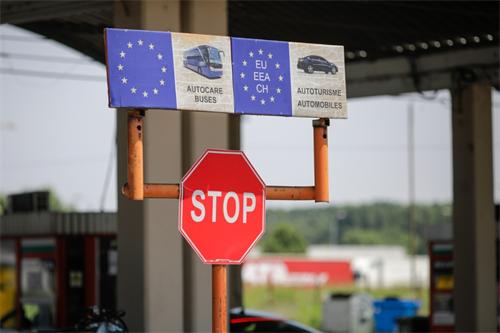
If you're a non-EU resident, Schengen travel insurance is a must. This isn’t just advice; it’s a regulation. The Schengen visa requires a minimum medical coverage of 30,000 euros, covering the entire Schengen Area.
Some travelers have been stopped at the border because their travel insurance only covered 15 days, but their trip lasted 20 days. They were required to buy additional insurance on the spot to enter the Schengen Area. This is an experience no one wants to go through.
Step 2: Vehicle Coverage — Focus on Two Key Aspects
Vehicle coverage is divided into three levels:

Step 3: Roadside Assistance — A Lifeline for Long-Distance Driving
Roadside assistance insurance is something I firmly recommend after comparing options. I came across a case online: someone was driving in Iceland, and their car got a flat tire in a remote area. Without roadside assistance, they called for a tow truck and ended up paying 1,800,000 Icelandic Króna (around 11,500 euros). Yes, you read that right—11,500 euros. In Iceland, many recovery services involve helicopters or large off-road vehicles, which can start at several hundred thousand Króna for a single tow. A roadside assistance policy, on the other hand, might only cost a few dozen euros for a 7-day period.
The Icelandic Road Administration's official website shows the price range for towing services. Regular towing costs between 600,000 and 1,000,000 Icelandic Króna (about 4,000 to 6,500 euros). However, if the tow occurs in a remote or harsh environment (such as glaciers or inland areas), the costs can increase dramatically, even reaching 1,500,000 Icelandic Króna (about 9,500 euros). More complicated situations, like high-difficulty towing or helicopter rescue, can result in even higher fees.
Section Two: Traffic Accidents and Theft Losses — Which Insurances Actually Cover What?
2.1 Traffic Accidents: Distinguishing "Damaging Others" from "Damaging Yourself"
This is where things can get confusing. Many people only realize during the claims process that their insurance covers damage to others, but not damage to their own vehicle.
Scenario 1: You damage someone else's property.
If you are primarily at fault, third-party liability will cover the damage to the other person's car and injuries. This is a legally required and basic level of coverage.
Scenario 2: Someone else damages your vehicle.
If the other party is at fault, theoretically, their third-party liability should cover you. But what if they don't have insurance, flee the scene, or the coverage is insufficient? This is where your own collision insurance comes in.
Scenario 3: You damage your own vehicle (e.g., crash into a wall, scrape a pillar, or flip the car).
In such “single-car accidents,” only collision insurance will cover the damage. Mark's incident in Rome is a perfect example—he thought his insurance would cover it, but he didn’t have collision coverage.
Key Point: Deductible
A case involving Anna left a lasting impression on me. She was rear-ended in the Netherlands. Though the accident wasn't her fault, she still had to pay 500 euros out of pocket for repairs because her collision insurance had a 500-euro deductible.
A deductible means that for each accident, you pay this amount upfront, and the insurance covers the rest. If you want to avoid any out-of-pocket expenses, zero-deductible collision insurance is the way to go.
2.2 Theft Losses: Distinguishing "Stolen Car" from "Stolen Belongings"
This is another common pitfall. Xiao Lin’s experience is a prime example. He thought his insurance would cover stolen items in the car, but it didn’t.
Scenario 1: The car itself is stolen.
This falls under theft insurance (usually included in collision or comprehensive coverage). The insurance company will reimburse you for the car’s actual value.
Scenario 2: A window is smashed and personal belongings are stolen.
This is a more complicated situation and needs to be dealt with separately:
- Broken window: Covered by collision insurance (since it's vehicle damage).
- Stolen belongings: Covered by travel insurance with theft coverage or a special theft insurance add-on.
I later found a pattern after reviewing a lot of data: in popular tourist cities like Paris, Rome, Barcelona, Milan, and Nice, vehicle theft rates are much higher than in other areas. If you're visiting these places, don't skimp on theft insurance, especially one that covers items inside the car.
2.3 Two Often Overlooked Coverages
- Tire and Glass Coverage
I saw a complaint online from someone who was driving in Germany and had their windshield shattered by a flying stone on the highway. Replacing the windshield cost 600 euros, and the insurance didn’t cover tire or glass damage.
Many European highways are paved with gravel, making it more likely for your windshield to get damaged by flying stones. Tire and glass coverage can cost just a few euros per day, but replacing a windshield can cost hundreds.
- Roadside Assistance
Beyond the Iceland example, I’ve heard of someone breaking down in the Alps and spending 800 euros to tow the car to the nearest repair shop. A roadside assistance policy could have saved them a lot of money, usually for just a few dozen euros.
Section Three: How to Calculate Reasonable Costs? Here’s What I Found
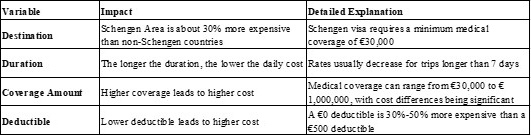
3.1 The Four Core Variables That Determine Costs
Based on my comparison of multiple insurance platforms, costs are mainly determined by these four factors:
3.2 My Actual Costs (14-Day Road Trip)
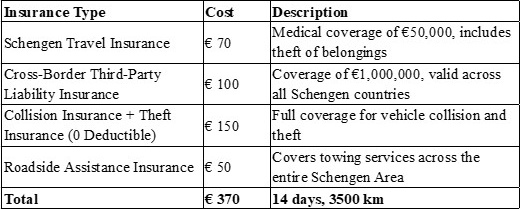
370 euros. While this might sound like a lot, when I think about Mark's 450-euro car repair, Xiao Lin’s 3,000-euro loss, or the 11,500-euro towing fee in Iceland, I feel this was money well spent.
3.3 Money-Saving Tips (Tested and Proven)
1. Buy in Advance: Many insurance companies offer an 8% discount if you purchase 45 days in advance.
2. Family Packages: For 3 people traveling together, there’s a 30% discount, and children under 12 get upgraded coverage for free.
3. Avoid Double Coverage: If your travel insurance already includes medical coverage, don’t buy additional medical coverage from the rental car company.
4. Price Compare on Multiple Platforms: Buying through an insurance broker platform is usually 10-15% cheaper than purchasing directly from the company’s website.
5. Annual Membership for Frequent Drivers: If you drive frequently, consider joining car clubs like ADAC, which offer European-wide roadside assistance for less than 100 euros a year.
Section Four: Is the Claims Process Complicated? How to Simplify It
4.1 Conclusion First: The Complexity Depends on Which Insurance You Buy
Based on my experiences and those of my friends, I divided the claims process into three categories:
- Case One: Zero-deductible full coverage from the rental company
- Case Two: Insurance with a deductible or additional insurance purchased from a third-party platform
- Case Three: Injury or theft
4.2 A Claims Process Case That Left an Impression on Me
A car owner in Germany was rear-ended during their road trip. His approach is worth learning from:
1. At the Scene: He immediately stopped, turned on hazard lights, set up warning triangles, and took photos of everything.
2. Police Report: The police arrived to file a report confirming the other party was at fault.
3. Contacting Insurance: He used the insurance app to submit the claim with photos the same evening.
4. Returning the Car: Since he had zero-deductible full coverage, he just signed the return documents and walked away without paying any fees.
5. Follow-up: Two weeks later, the insurance company confirmed the case was settled, and he didn’t need to do anything further.
He concluded: “Choosing the right insurance and handling the situation properly made the claims process really simple.”
4.3 Simplifying the Claims Process: "Do’s and Don’ts"
Do’s:
1. Do Take Photos: Take photos of the scene, vehicle damage, the other party’s license plate, and insurance details.
2. Do Report to the Police: No matter how minor the accident, report it to the police to get an official report. This is essential for making a claim.
3. Do Record Information: Write down the other party’s name, contact details, insurance company, and license plate.
Don’ts:
1. Don’t Admit Fault: Let the insurance companies determine fault. Just state the facts.
2. Don’t Wait to Report: Most insurance companies require reporting within 24-72 hours. The longer you wait, the harder the claim becomes.
3. Don’t Lose Original Documents: Keep all receipts, reports, and invoices. Save a digital copy on your phone and keep a backup at home.
4.4 On Claims Timeframes
From what I’ve seen:
- Simple Cases (small repairs, minor medical bills): 7-15 days
- Moderate Cases (require further verification): 3-4 weeks
- Complex Cases (multiple countries, disputed liability): 1-2 months or longer
The EU has the advantage that insurance companies must provide English-speaking representatives, and there’s coordination between countries to speed up the process. This is good news for non-EU residents like us.
Section Five: Insurance Strategies Vary Greatly Based on Nationality
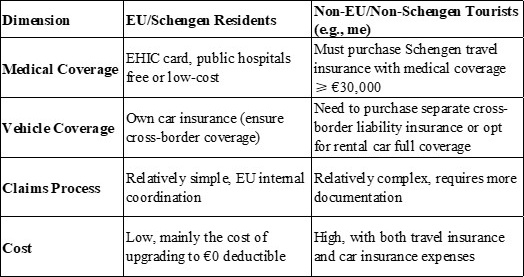
5.1 Core Differences Between Two Groups
This section took the longest for me to research because my situation as a non-EU resident is very different from that of EU residents.
5.2 If You’re a Non-EU Resident, Avoid These Pitfalls
- Pitfall 1: Thinking your car insurance "might" cover Europe
- Pitfall 2: Forgetting to check if insurance covers Switzerland, Norway, or Iceland
- Pitfall 3: Thinking travel insurance includes vehicle coverage
- Pitfall 4: Not saving the roadside assistance hotline in your phone
Section Six: Specific Advice for Different Types of Travelers
6.1 For EU/Schengen Residents
1. Confirm that your car insurance covers all Schengen countries
2. Consider upgrading to zero-deductible collision insurance
3. Don’t ignore theft insurance when visiting popular tourist cities
4. Bring your EHIC card for healthcare in public hospitals
5. If you frequently drive, ADAC membership is a cost-effective choice
6.3 Final Words
Starting from Belgrade, driving along Croatia’s coastal roads, crossing Slovenia’s Alps, sipping coffee in Austria’s small towns, speeding down Germany’s highways, and finally arriving at Switzerland’s snow-capped mountains—this was the best part of my trip last summer.
And part of the reason it was so great was the research I did on insurance. Honestly, before I left, I was reluctant to spend 370 euros on insurance. But after returning, I don’t regret it at all. In Europe, unfamiliar roads, different languages, and diverse laws can make the trip stressful, but with the right insurance, I could relax and enjoy the scenery.
Insurance isn’t the highlight of your trip, but it’s the last line of defense when something unexpected happens.
Safe travels, and I wish you smooth journeys.
Appendix: Pre-Trip Checklist
Insurance-Related
〇 Schengen travel insurance (medical coverage ≥ 30,000 euros, including theft protection)
〇 Cross-border third-party liability insurance (covering all planned countries, check if it includes Switzerland, Norway, Iceland)
〇 Collision insurance (preferably zero deductible)
〇 Theft insurance (check if it covers items inside the car)
〇 Roadside assistance insurance
〇 Paper and electronic copies of all policies
〇 24/7 hotline numbers for all insurance companies (stored in your phone with international dialing info)
In-Car Preparation
〇 First aid kit (required in Europe)
〇 Reflective vest (required in Europe, one for each person)
〇 Triangle warning sign (required in Europe)
〇 Phone mount and charger
〇 Offline translation app pack (at least including German, French, Italian, Spanish)
Final Step Before Departure: Call your insurance company to confirm all policies are active and cover all the countries you’ll visit. A quick call is far better than realizing there’s a problem at the border.
References
1. European Commission. (2023). Motor insurance in the EU: Protection of injured parties. Retrieved from [https://ec.europa.eu/info]
2. European Commission. (2024). Schengen visa insurance requirements. Retrieved from [https://home-affairs.ec.europa.eu]
3. ADAC (Allgemeiner Deutscher Automobil-Club). (2024). Breakdown assistance and cross-border roadside services in Europe. Retrieved from [https://www.adac.de]
4. Icelandic Road and Coastal Administration. (2023). Road service and vehicle recovery cost information. Retrieved from [https://www.road.is]
5. European Consumer Centres Network (ECC-Net). (2022). Car rental and insurance in Europe: Your consumer rights. Retrieved from [https://www.eccnet.eu]
6. Allianz Partners. (2024). Travel insurance coverage: What is included and excluded. Retrieved from [https://www.allianz-partners.com]
About the Author
Lukas Markovic
Lukas Markovic is a Serbia-based long-distance driving enthusiast and cross-border travel researcher with a focus on European road trip logistics and insurance planning. Having completed multiple multi-country driving routes across the Balkans and Central Europe, he specializes in translating complex insurance policies into practical, real-world advice for international travelers.
Editorial Transparency Statement
This article is based on a combination of personal travel experience, real-life case studies from acquaintances, and publicly available insurance policy information across multiple European providers.
The purpose of this content is educational and informational only. It does not constitute legal or financial advice. Insurance coverage, pricing, and claim procedures may vary depending on the provider, country, and individual circumstances.
Readers are strongly encouraged to verify policy details directly with insurance companies before purchase, especially for cross-border coverage and exclusions.
Disclaimer
The information in this article should not be considered professional insurance, legal, or financial advice. Insurance coverage, exclusions, and eligibility vary widely depending on the provider, jurisdiction, and individual circumstances.
Recommended for you